
The VPN for Cheap Flights Hack: Does It Really Get You Cheaper Flights?
flight You’ve probably heard about the VPN flight hack – the idea that changing your virtual location can help you save money on flights. It sounds a bit like magic, or perhaps a myth. But when it comes to finding cheap flights, this flight booking hack can absolutely work.
This guide will explain exactly what the VPN flight trick is, why it works (hello, geo-pricing airlines!), and how you can use it to get better deals on your next trip.
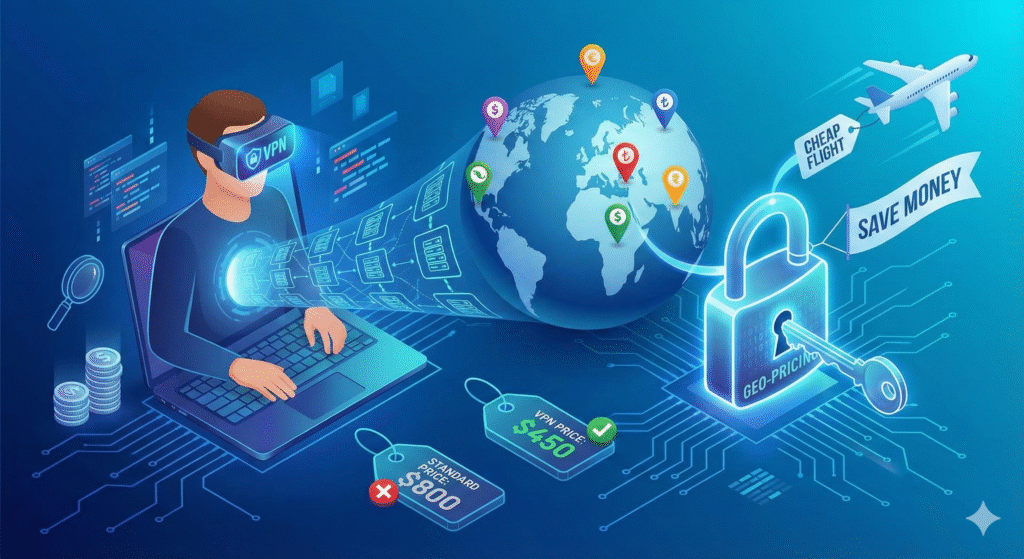
What is the VPN for Cheap Flights Hack?
A VPN (Virtual Private Network) lets you connect to the internet through a server in a different country. When you do this, websites (including airline and travel booking sites) see you as being in that country, not where you physically are.
The VPN flight hack involves using a VPN to pretend you’re searching for flights from a country where prices might be lower for that specific route. This can help you save money on flights by bypassing geo-pricing airlines might use.
Why Does This VPN for Cheap Flights Booking Hack Work? (The Geo-Pricing Secret)
Airlines and online travel agencies (OTAs) use complex pricing strategies. Sometimes, the price of a flight depends on:
- Where you’re booking from: A flight from London to New York might cost more if booked from the UK than if booked from, say, Mexico or India, due to local market demand, competition, and average income levels.
- Local Currency and Taxes: Prices can differ based on local taxes or the strength of the currency in the region you’re booking from.
By using a VPN, you’re essentially testing these different market prices. This flight booking hack doesn’t always work for every route, but when it does, it can lead to significant savings.
How to Use the VPN for Cheap Flights Hack (Step-by-Step)
Ready to try this VPN flight hack? Follow these steps:
1. Get a Reputable VPN Service: * You’ll need a VPN provider with servers in many different countries. Popular options include ExpressVPN, NordVPN, or Surfshark. Many offer free trials or a money-back guarantee.
2. Start with an Incognito Window: * Always open a new incognito or private browsing window before you start. This stops websites from seeing your past search history and cookies, which can sometimes affect prices.
3. Clear Your Cookies: * Even with incognito mode, it’s a good habit to clear your browser’s cookies and cache before starting a new VPN session.
4. Pick a Country (And Test Others): * Now, activate your VPN and connect to a server in a different country. Common countries to test include: * Lower-income countries: Mexico, India, Turkey, Eastern European countries. * The airline’s home country: If you’re flying British Airways, try connecting to a UK server if you’re not already in the UK. * There’s no magic country that always works, so you might need to try a few.
5. Search for Your Flight: * Go to your preferred flight search tool (like Sthgilf!) or the airline’s website. Search for your desired flight. * Pay attention to the currency. The price might be shown in the local currency of the VPN server you’re connected to. Use a currency converter to compare.
6. Compare and Book: * If you find a cheaper price, you can often proceed to book the flight through the website while still connected to the VPN. Double-check all details and ensure you’re comfortable with the booking site’s terms.
7. Turn Off Your VPN (Optional): * Once booked, you can turn off your VPN. It’s only needed for the search and booking process.
What Most Flight Finders Don’t Tell You About VPNs
The big airline comparison sites (like our competitor, Skyscanner) aim to show you the cheapest price from your current location. They are built for speed and simplicity. But they won’t proactively tell you:
- “Hey, if you used a VPN and pretended to be in Mexico, this flight would be £100 cheaper.”
- “This specific airline often has better prices if you visit their site directly from their home country.”
They are designed to aggregate, not to advise on advanced flight booking hacks. They provide data, but not the deep strategies to manipulate that data in your favour.
The Sthgilf approach is to empower you with these less common flight booking hacks. While a VPN isn’t a guarantee for cheap flights every time, it’s a powerful tool in your arsenal to save money on flights that the standard search doesn’t offer. It takes a little extra effort, but that effort can truly make geo-pricing airlines work for you. Contact us to know more.
Your VPN Flight Hack Questions Answered!
Q: Does the VPN flight hack always work?
Q: Is using a VPN to book flights legal?
Q: Which countries should I connect my VPN to first?
Q: Will connecting to a VPN slow down my internet?
Q: Can I use a free VPN?